The Producer
The estate Amistat was born from the meeting of two winemakers, Julien Ditté and Olivier Cazenave, united by a friendship and a shared passion for the historic grape varieties of Roussillon, particularly Grenache. Their project came to life around 2010-2011 with the idea of producing authentic wines, far from the standardization of taste, by valuing a Mediterranean vineyard sometimes threatened with uprooting due to lack of profitability. Their production remains deliberately confidential, in order to preserve an artisanal and peasant approach to the winemaking profession.
The estate is located in the Roussillon, south of Perpignan, in the area of Aspres, near the Spanish border. The vines, planted mainly with grenache, macabeu, and carignan, grow on soils of brown schist mixed with clay, quartz, and pebbles, characteristic of this Catalan landscape. The vineyard covers about 3.5 hectares, allowing for entirely manual work and special attention to each plot. The vines are managed without chemical herbicides, with natural ground cover and a search for balance between vigor and deep rooting.
Today, Amistat produces a range of natural wines made with spontaneous fermentations from indigenous yeasts, without filtration and with very few sulfites. The cuvées – red, white, or maceration wines – reflect the Mediterranean grape varieties of the estate, particularly grenache in various forms as well as macabeu. The wines are aged and bottled with minimal intervention, in order to preserve the expression of the vintage, the terroir, and the fruit, with the idea of offering lively, sincere wines that are deeply connected to their origin.
The Wine
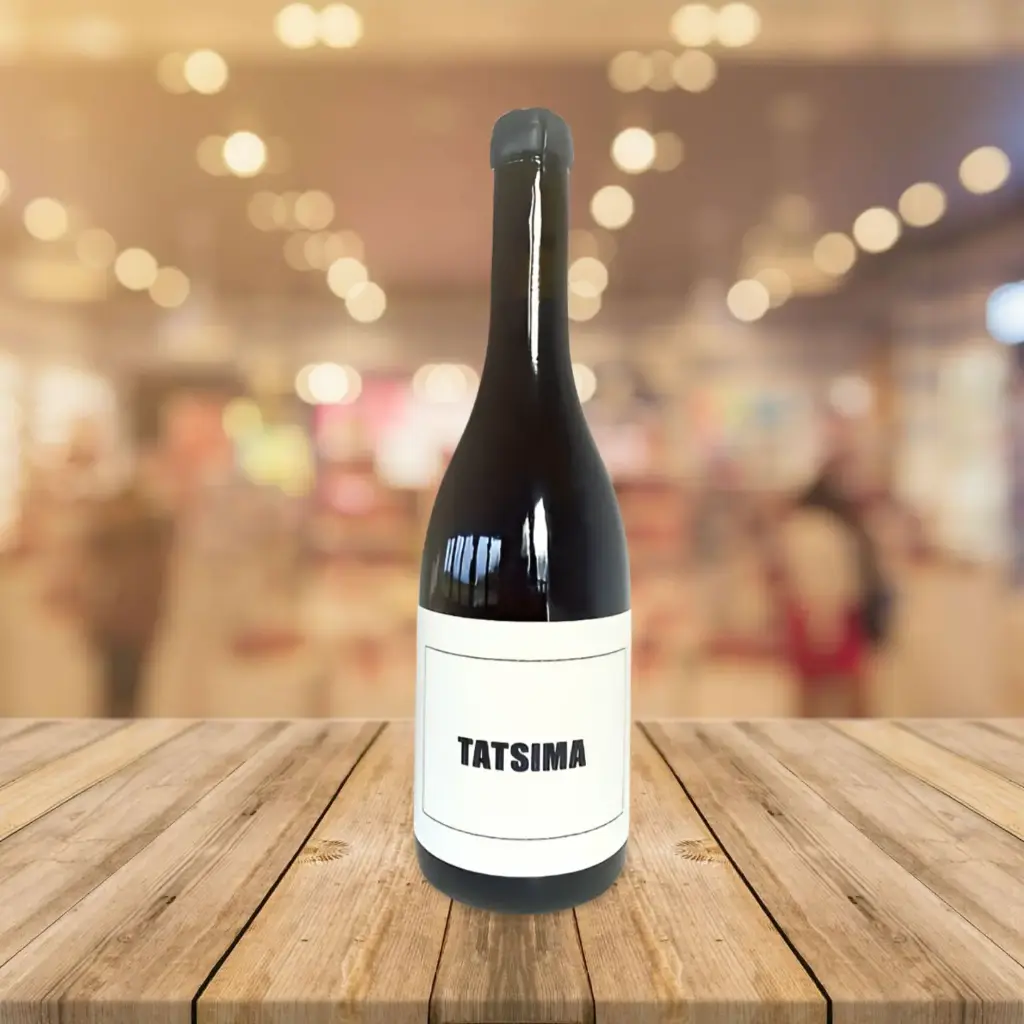
Co-fermentation of whole clusters of the 4 grape varieties Macabeu, Grenaches white, gray, and black to produce a light-colored red wine.
After 12 months of aging in bottle, without contact with wood, this blend takes on notes of typical Burgundian pinotage. Production: about 1200 bottles per year.
Tasting
With a lighter appearance, Tatsima Noir highlights a true structure of chiseled, sharp tannins.
The aromas of wild cherry allow for highlighting a fillet of red mullet with tapenade or a ceviche of sea bream.
The well-present tannins pair it with a squab, a pheasant stuffed with sweet apples, a pan-seared duck foie gras, and roasted poultry livers in juice and well peppered.