The Producer
 Founded in 2001, the Philippe Pacalet business quickly became an essential reference for great Burgundy wines. A great-nephew of Marcel Lapierre, an emblematic figure of natural wine, Philippe Pacalet gained solid experience at the Prieuré Roch before launching his own project. His ambition is clear: to reveal with the utmost fidelity the identity of the most prestigious Burgundy climates through winemaking that respects the grape and the vintage.
Philippe Pacalet does not own a vineyard, but carefully selects plots cultivated by partners who share the same quality requirements. Mythical appellations such as Gevrey-Chambertin, Chambolle-Musigny, Nuits-Saint-Georges, Pommard, and Corton-Charlemagne give rise to wines of great precision. Fermentations are carried out with indigenous yeasts, extractions remain delicate, and the use of sulfur is reduced to a strict minimum in order to preserve all the finesse, energy, and expression of the Burgundy terroir.
Today, Philippe Pacalet is among the most sought-after winemakers in Burgundy. His cuvées, produced in limited quantities, delight both enthusiasts and the finest tables for their aromatic purity, elegance, and ability to faithfully express each terroir. A true reference for low-intervention Burgundy wines, the estate continues to embody a demanding and authentic vision of viticulture, where the terroir shines brightly in every bottle.
The Wine
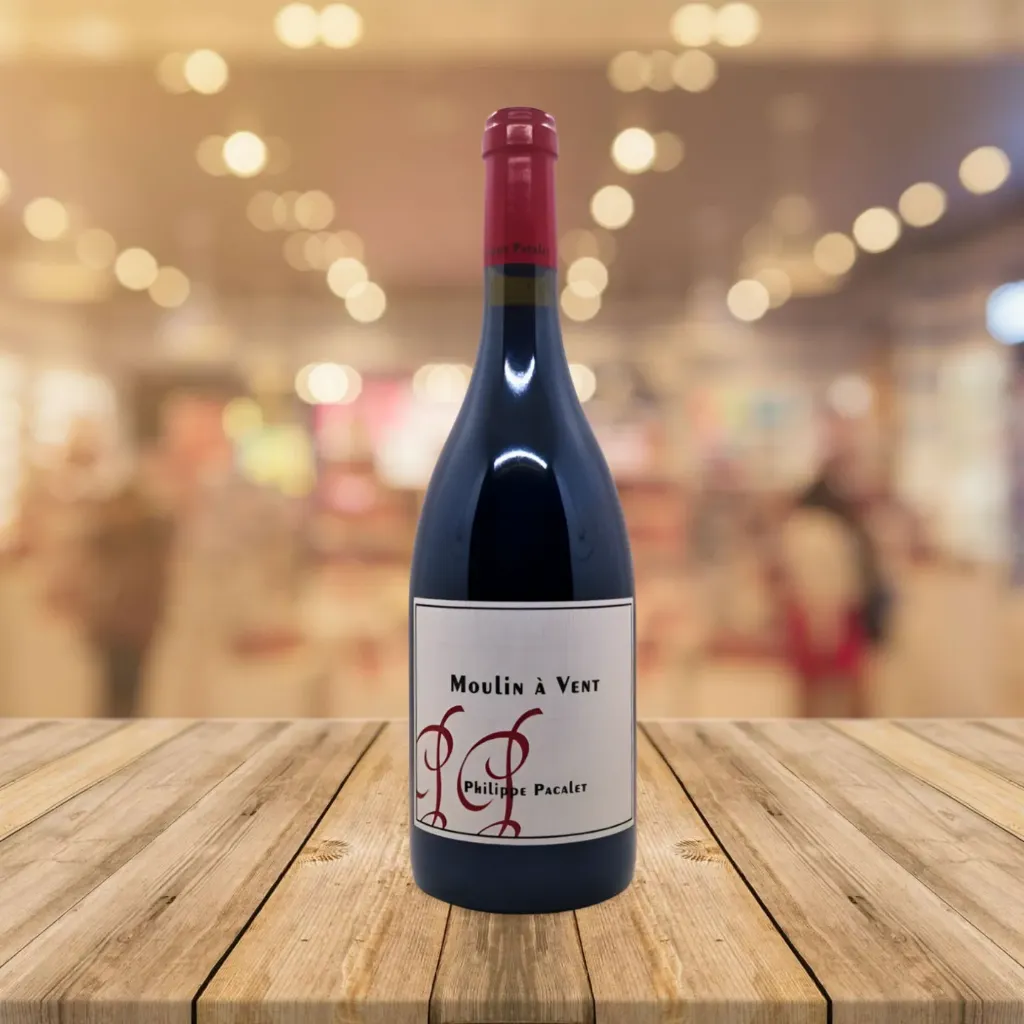
Granite with manganese, eroded on the surface in the form of pink sands and forming a granite arena called "gorrhe." Southeast orientation; the plots are located on the climates "Les Roches," "La Delatte," "Vierre Manin," "Les Amandilliers" & "La Grande Charrière."
Vinification
Whole bunches sorted without SO2 with daily punching down for 3 weeks. Alcoholic fermentation with indigenous yeasts without artificial temperature control. Malolactic fermentation in large casks.
Aging
On the lees, referred to as "in reduction," in large casks without racking, with stirring without SO2 for 15 months.
Tasting
Beautiful dark red color. It is floral (violets, roses) and fruity (raspberry) with notes of licorice. It is a fleshy and powerful wine with a mineral tension due to manganese; it is elegant, charming, and structured. Enjoyable now but built for aging.