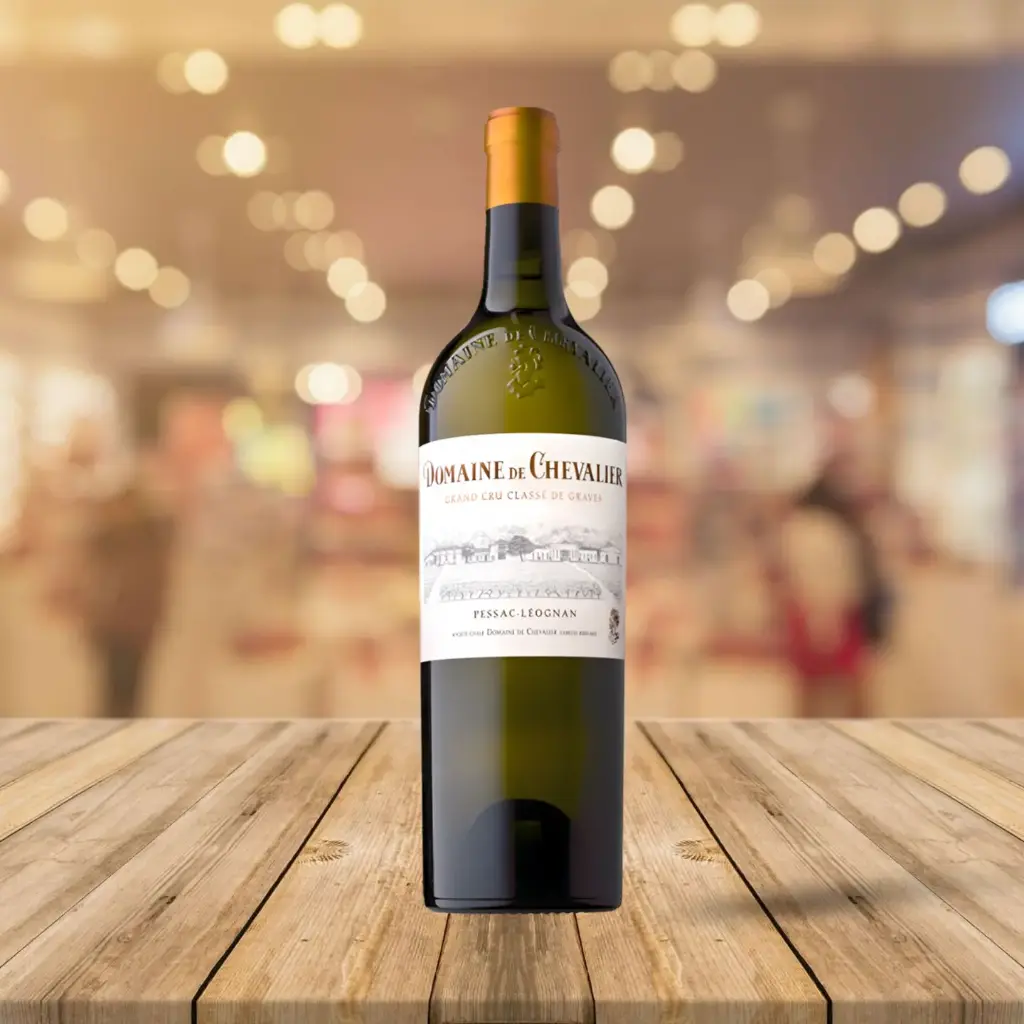
The Producer
The history of Domaine de Chevalier dates back several centuries, with a winemaking vocation attested since the early 16th century. Its name, derived from the old Gascon term "Chivaley," reflects its ancient origins. The estate has experienced various periods of development and decline before gradually regaining its importance within the Bordeaux vineyard during the 19th century. A decisive turning point occurred in 1983 when the Bernard family acquired the estate. Olivier Bernard then took over its direction and undertook significant restructuring and modernization work, both in the vineyard and in the cellar. Under his leadership, the estate gradually established its reputation among the great properties of Pessac-Léognan, while retaining its unique designation of "Domaine," rather than that of château.
Located in Léognan, in the heart of the Pessac-Léognan appellation, the vineyard benefits from a unique natural environment, nestled in a clearing surrounded by forests. This location helps create a microclimate favorable to the ripening of grapes and the preservation of biodiversity. The 67 hectares of vines rest on deep gravel soils sitting on a clay-gravel subsoil, whose diversity allows for precise management of the different plots. The red vineyard, dominated by Cabernet Sauvignon and Merlot, is complemented by Petit Verdot and Cabernet Franc. The whites combine Sauvignon Blanc and Sémillon. The property is part of a demanding environmental approach, with particular attention paid to soil life and the balance of the vine. The harvests are manual, and the grapes undergo rigorous sorting. In the cellar, the vinifications are adapted to each plot: the reds benefit from measured extraction and aging in barrels, while the whites are directly fermented in casks and then aged on fine lees to preserve their complexity and freshness.
Today, the Domaine de Chevalier is still run by the Bernard family, with Olivier Bernard at the helm and a technical team dedicated to the pursuit of precision and consistency. Classified as a Grand Cru Classé of Graves in both red and white, it produces two characterful wines that each express the particularities of their terroir. The grand red wine stands out for its structure, depth, and elegance, while the white, produced in more limited quantities, is recognized for its aromatic richness, tension, and remarkable aging potential. The estate also offers a second wine, L’Esprit de Chevalier, as well as complementary cuvées. Faithful to a philosophy based on demand, finesse, and respect for the grape, the estate continues its development by combining Bordeaux heritage, technical mastery, and constant attention to its environment.
The Wine
Harvest: manual in crates, 3 to 5 selections, depending on ripeness. Settling and fermentation in barrel.
Vinification: direct fermentation in barrel, aging of the grand wine for 18 months in barrel (1/3 new wood), with stirring of the lees.
Tasting
Pretty pale yellow gold color, crystalline. Bright nose of various white and exotic fruits mixed with citrus and white flowers. Vine peach, nectarine, pear, apricot, mango, lychee, citrus, acacia flower, hawthorn, and honeysuckle. Burgundy mouthfeel: ample, rich, flavorful, indulgent, very refined and well held by energetic liveliness. Long finish and great fruity finesse.
Scores and Notes
96
James Suckling
96
Wine Advocate
18/20
Jancis Robinson
94
Decanter