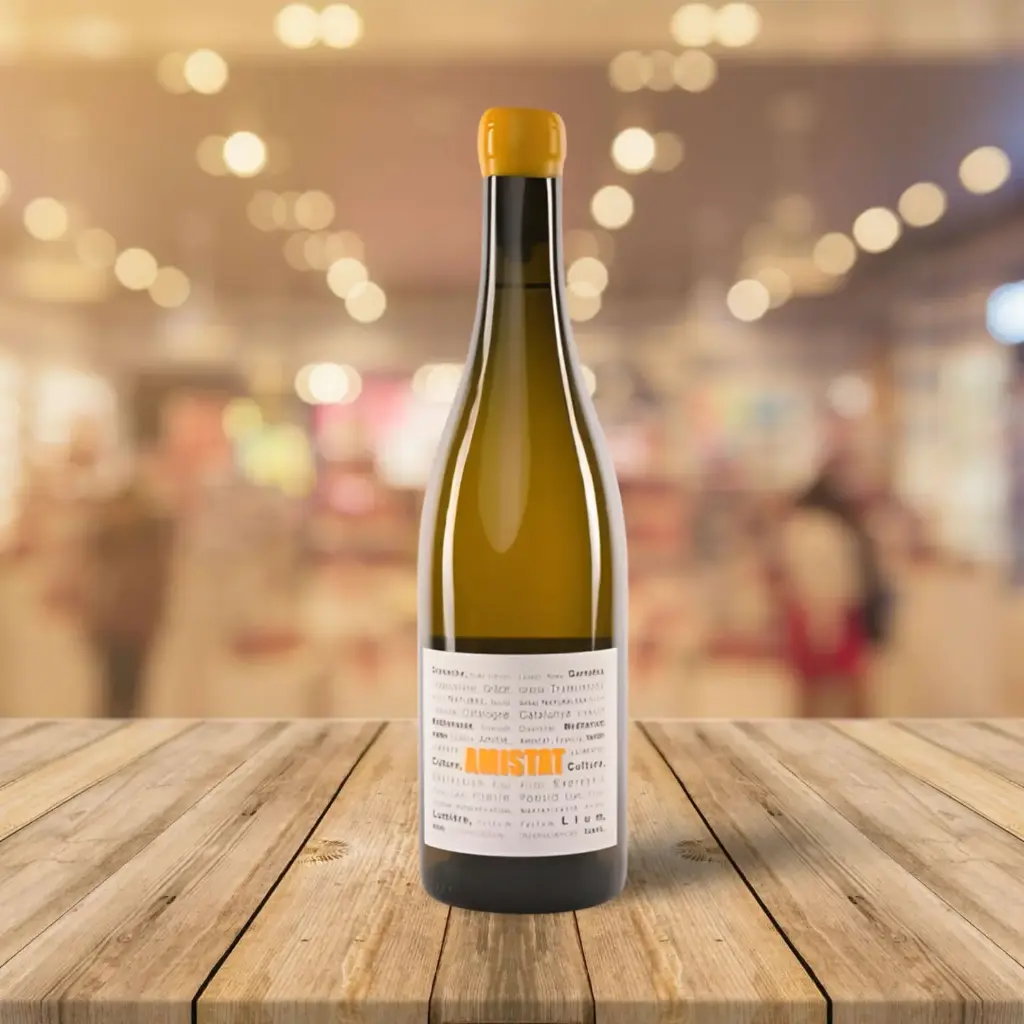
The Producer
The Amistat estate was born from the meeting of two winemakers, Julien Ditté and Olivier Cazenave, united by a friendship and a shared passion for the historic grape varieties of Roussillon, particularly Grenache. Their project came to life around 2010-2011 with the idea of producing authentic wines, far from the standardization of taste, by valuing a Mediterranean vineyard that is sometimes threatened with uprooting due to lack of profitability. Their production remains deliberately confidential, in order to preserve an artisanal and peasant approach to the winemaking profession.
The estate is located in Roussillon, south of Perpignan, in the Aspres area, near the Spanish border. The vines, primarily planted with Grenache, Macabeu, and Carignan, grow on soils of brown schist mixed with clay, quartz, and pebbles, characteristic of this Catalan landscape. The vineyard covers about 3.5 hectares, allowing for entirely manual work and special attention to each plot. The vines are managed without chemical herbicides, with natural ground cover and a search for balance between vigor and deep rooting.
Today, Amistat produces a range of natural wines made with spontaneous fermentations using indigenous yeasts, without filtration and with very few sulfites. The cuvées – red, white, or maceration wines – reflect the Mediterranean grape varieties of the estate, particularly Grenache in various forms as well as Macabeu. The wines are aged and bottled with minimal intervention, in order to preserve the expression of the vintage, the terroir, and the fruit, with the idea of offering lively, sincere wines that are deeply connected to their origin.
The Wine
From the pressing, Grenache Gris, White and Macabeu are blended to each bring their complexity.
The juices are fermented in demi-muids (French oak barrels of 600L) for 12 months for decantation during the winter.
At the end of aging, the wine is racked by eye for resting in stainless steel tanks before bottling. The wine is neither fined nor filtered. Its decantation during the winter allows for clarity without filtration.
The natural carbon dioxide from alcoholic fermentation is carefully preserved as a protector of the aromas.
Tasting
Amistat white is a mouth-filling white that, due to its power, stands up to strong and intense dishes. The nose is characterized by an attack of sunny fruits, fresh nuts, and reveals aromas of pear, kumquat, candied lemons, and ginger.